
Everyone loves a good farmers’ market: perusing fresh produce and meat, chatting with farmers and vendors, picking up a bouquet of flowers and spending the afternoon outside are all hallmarks of a perfect spring day. Naturally, spending that much time outdoors in the spring can be uncomfortable for people with allergies. Here are some tips for enjoying the market to the fullest without worrying about sneezing all over those gorgeous bunches of salad greens.
Allergy Triggers at the Farmers’ Market
In the spring, pollen is the biggest culprit of allergy symptoms. Pollen is the microscopic, dust-like substance that plants and flowers release into the wind to pollinate and reproduce. It is technically harmless to the body—it won’t damage anything or make you sick—but your immune system treats it as though it is a threat and deploys an aggressive response to destroy it.
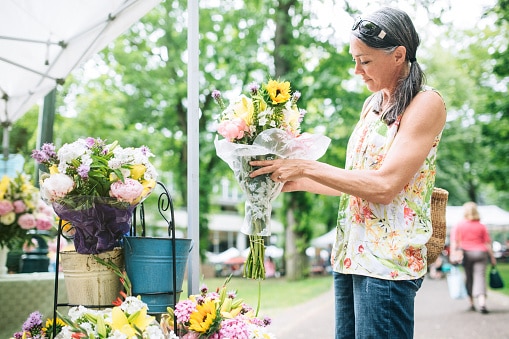
There’s no shortage of pollen flying around the farmers’ market. Since these events usually take place outdoors, there’s probably landscaping or other flora nearby. If your market features a bouquet stand, some of those flowers may still be puffing out pollen, especially if they’re freshly cut (which is, of course, why we love buying flowers at the farmers’ market in the first place). Vegetables at the farmers’ carts may carry pollen on them from the farm to the market, which then comes home with you when you purchase them. This onslaught of pollen will have you sneezing in no time.
How to Find Relief
There are several strategies for dealing with allergies. Here are some tips to help you navigate the farmers’ market comfortably.
Before You Go
There are some basic preparations you can make before heading to the market that might help prevent the worst of your symptoms, such as:
- Check the pollen count on the local weather forecast before heading to the market so you know what to expect. (Consider staying home if it’s an especially high pollen day.)
- Take an antihistamine or other preferred over-the-counter allergy relief medication
- Irrigate your nose
- Grab a pack of tissues to keep in your pocket or purse
Avoid Contact with Pollen
Avoiding contact with the substances that cause you allergic reactions is the first step in allergy management, but that shouldn’t have to mean staying home from the farmers’ market entirely. Instead, consider:
- Wearing a mask over your nose and mouth to keep pollen out of your airways
- Wearing long sleeves and gloves to prevent skin contact, which could lead to a rash or eczema
- Avoid other forms of irritants and air pollution, such as cigarette smoke or car exhaust, that could exacerbate the effects of pollen
When You Get Home
Once you’re home, it’s time to clean off any pollen that may have hitched a ride back to your home. This is an especially good idea if you had a particularly sniffly time at the farmers’ market.
- Take a shower and change into clean clothes. Put your dirty clothes straight into the hamper, or better yet, the wash.
- Wipe down any bags or baskets you used to carry your produce
- Rinse your produce
Seek Help
If your allergies are making activities like farmers’ markets unbearable, it may be time to consult an allergist for stronger relief strategies. After learning about your symptoms and triggers, they’ll be able to help you build a custom allergy treatment plan, which could involve prescription medications or immunotherapy. This will make springtime, especially farmers’ markets, much more enjoyable for you! Contact Carolina Pines ENT to learn more.