
If you notice sneezing, itchy eyes or a runny nose while dusting or pulling holiday decorations out of storage, you might have a dust mite allergy.
Fortunately, immunotherapy may offer effective relief. Let’s explore recent research on this treatment option and share some additional tips for managing dust mite allergies.
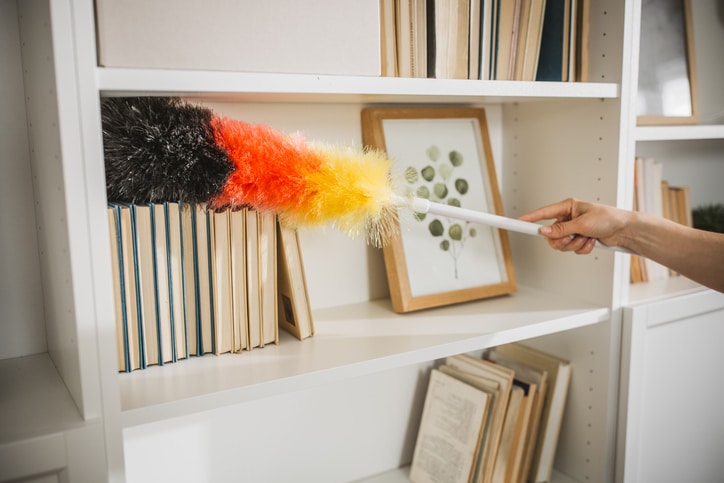
Dust Mite Allergies Explained
If dusty environments make you sneeze, it’s actually dust mites, not the dust itself, that cause the reaction. Dust mites are tiny, often invisible creatures that live in household dust and feed on it. It is the fecal matter and dead bodies of dust mites that your body reacts to.
Understanding Immunotherapy
Immunotherapy is a long-term allergy management approach that gradually introduces small amounts of allergen extracts to your system. This helps your immune system build tolerance to the allergen. The treatment can be administered either by injection (subcutaneous immunotherapy) or as drops (sublingual immunotherapy) placed under the tongue.
About the Recent Study on Immunotherapy
A 2022 study published in the Journal of Allergy and Clinical Immunology: In Practice investigated how sublingual immunotherapy affects people with atopic dermatitis triggered by dust mites.
Atopic dermatitis, more commonly known as eczema, is a condition characterized by itchy, inflamed skin, often accompanied by rashes or bumps, especially around the knees and elbows. This condition can be linked to other conditions such as asthma and rhinitis.
In the study, 91 participants (aged three and older) received either allergy drops or a placebo over an 18-month period. The study results revealed that those receiving the actual allergy drops showed significant symptom improvement compared to those on the placebo. This suggests that sublingual immunotherapy could be a helpful addition to the management of dust mite allergies, particularly for people with eczema.
Tips for Reducing Dust Mite Allergies at Home
Aside from considering sublingual immunotherapy, here are some steps to help minimize dust mite exposure in your home:
- Wash bedding weekly in hot water to kill dust mites. Local laundromats often have machines with hot-water settings that are ideal for this.
- Use allergy-proof covers on pillows, duvets and mattresses.
- Swap your vacuum for one with a HEPA filter, which can trap dust mite particles.
- Wipe surfaces with a damp cloth rather than dry dusting, as this helps keep allergens from spreading.
- Regularly wash or clean curtains and upholstered furniture.
- Choose roller blinds that are easy to wipe down.
- Opt for non-carpet flooring, such as wood or vinyl, instead of carpet, which can trap dust.
- Use a portable HEPA air filter in rooms where you spend the most time.
To learn more about managing dust mite allergies or to schedule an appointment with a specialist, reach out to Carolina Pines ENT.